Introducing to Astro
What's Astro
Astro is a JavaScript framework for generating static websites and was created by a programmer named Fred K. Schott in 2021. Schott developed Astro.js as a framework for building fast and secure websites using technologies such as React and Vue.js. The framework was developed with the goal of simplifying the creation of static websites, improving page loading speed and providing an enhanced user experience. Astro.js is open source software and is available on GitHub.
Although it started out as a JavaScript framework for static websites, Astro was not created to compete with other frameworks. Instead, Astro was created to work with other frameworks. The creators of Astro themselves have made it clear that the framework does not meet all frontend development needs and that there are use cases for which the tool is not suitable. In fact, it is a tool that has a very specific target: the development of content-centred websites.

Astro's unique characteristics
1. Template language
The Astro template language is a markup language used for the creation of static web pages. The aim of this project is to make the process of creating web pages more straightforward. The markup system used is very simple and based on HTML tags, although it supports the use of variables, as well as loops and conditions to create dynamic web pages. One of the special features of the Astro template language is the ability to generate image thumbnails automatically and to create photo galleries quickly and intuitively. In addition, the Astro template language is highly customisable and supports the use of CSS and JavaScript to create aesthetically pleasing and interactive web pages.
2. Framework-agnostic
One of the main features and strengths of Astro is its 'framework agnostic' nature, i.e. its ability to integrate and work with other libraries and JavaScript frameworks commonly used in front-end development. This means that developers can still integrate Astro into an existing application based on a different framework (such as React) without having to modify the architecture of the site or run into compatibility problems with pre-existing libraries and frameworks, nor be constrained by the technical choices made previously. In summary, Astro's 'framework agnostic' feature offers greater flexibility to web developers and allows them to create high-performance static web pages using the development tools of their choice, without having to compromise the quality of their work or add excessive complexity.
3. Client-side performance
Astro was designed with the objective of offering high performance, both client-side and server-side. With regard to client-side performance, Astro uses advanced rendering techniques such as static extraction of components and pre-fetching of resources such as images and JavaScript files, again with the aim of improving the user experience. For example, when using Astro, components are statically extracted, which means that they are generated asynchronously before the JavaScript code is executed. This approach considerably improves page loading time as the components are loaded independently of the JavaScript code and can be cached by the browser for faster retrieval. Astro also supports the generation of static pages: these can be pre-generated during the compilation process and served as static HTML files, without the need to execute client-side JavaScript code. This considerably increases client-side performance, as static HTML files can be served more quickly for the benefit of the user.
Pros and cons
There are several pros to using Astro as a web development platform: In the words of the authors: 'The goal of Astro is to be accessible to all web developers. The framework is indeed easy to set up and use, is oriented towards a server-first API design and does not include any JS runtimes.
- It provides a comprehensive set of tools to cover all the needs of developers.
- It includes file-based routing, data retrieval, resource management and much more.
- It is possible to use Astro in conjunction with other popular frameworks (React, Preact, Svelte, Vue and many others) without impacting their operation or making development more complex.
- Astro also offers support for Markdown.
As with any technology, there are also some cons to using Astro as a web development platform:
- For creating particularly complex or interactive projects such as administration dashboards or social networks, Astro is probably not the ideal framework. Astro was born and focused for the development of image-rich websites and static content.
- The number of resources, tools and functionalities available certainly cannot yet compete with more famous and established frameworks such as React, at least for the time being, but the community revolving around Astro is very active and constantly growing, and in particular
- the Discord channel is full of information and developers willing to help and provide suggestions and advice.
- Astro's future looks solid and rosy, but only time will tell.
When to Use Astro
Astro is an excellent choice for a variety of web projects, especially marketing sites, blogs, documentation sites, and personal websites. Here are examples of ideal use cases for Astro:
Here are examples of ideal use cases for Astro:
- Marketing websites and landing pages
- Blogs and online magazines
- Documentation websites
- Personal websites and portfolios
- Web applications with mostly static content
- Websites that require great SEO
- Sites where performance is critical
- Teams that want to incrementally adopt Astro
- Developers who value control over final HTML output
Here are some additional examples of ideal use cases for Astro:
Ecommerce product pages – Astro can render product details quickly while handling interactive elements like carts/checkout with islands.
Company websites – Astro allows building fast, SEO-friendly websites to represent your business online.
Blogs with lots of traffic – The performance of Astro sites can better handle high volumes of blog traffic.
Sites with global reach – Astro’s SSR and ISR provide good performance for users across geographies.
Marketing campaign microsites – Quickly build one-off sites for marketing campaigns.
Widgets and embeddables – Create lightweight widgets/tools to embed on other sites.
Open source project documentation – Documentation sites benefit from Astro’s markdown support.
Developer portfolios – Showcase your work and projects with a fast personal site.
Static news sites – For news sites with mostly static content, Astro can excel.
Forums and communities – Balance discussions with Astro’s static speed.
Small business websites – Get a professional online presence with great performance.
Conference/event websites – Astro sites can handle traffic spikes from events well.
Astro is well-suited for sites that need to render quickly, require excellent SEO, and demand low maintenance overhead. The island architecture also allows scaling up dynamic functionality over time.
Of course, every technology has its tradeoffs. Astro may not be the best choice for complex web apps with mostly client-side interactivity. But for a wide range of websites, Astro provides the optimal blend of performance, SEO, and developer experience.
The Astro Advantage
Astro is not just another web framework. It's a comprehensive solution that offers a variety of features and benefits, making it stand out in a crowded landscape.
1. Single Framework, Multiple Possibilities
Astro allows you to work with multiple frontend frameworks (React, Vue, Svelte, and more) within the same project. This flexibility empowers developers to utilize their preferred framework while creating a cohesive and powerful application.
2. The Killer Feature: Astro View Transitions
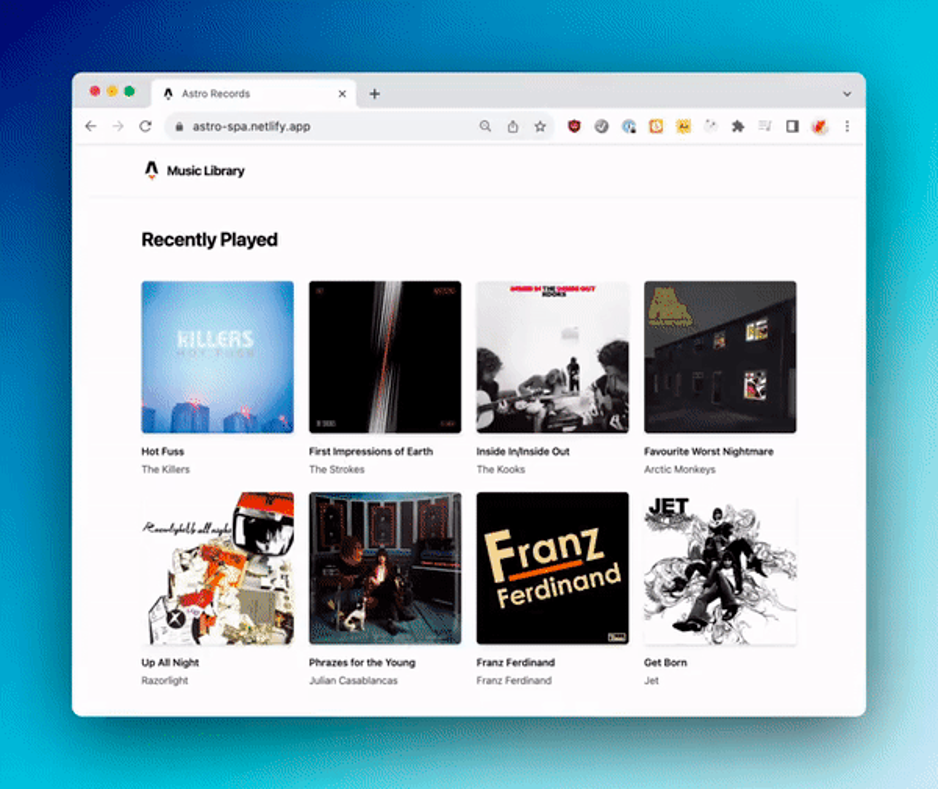
View Transitions is a set of new platform APIs that unlock native browser transition effects between pages. Historically this has only been possible in Single Page Applications (SPAs), but web browsers and spec authors have been working hard over the last few years to bring native page transitions to the platform, and Astro 3.0 is the first web framework to bring them to the mainstream.
3. Effortless Scalability
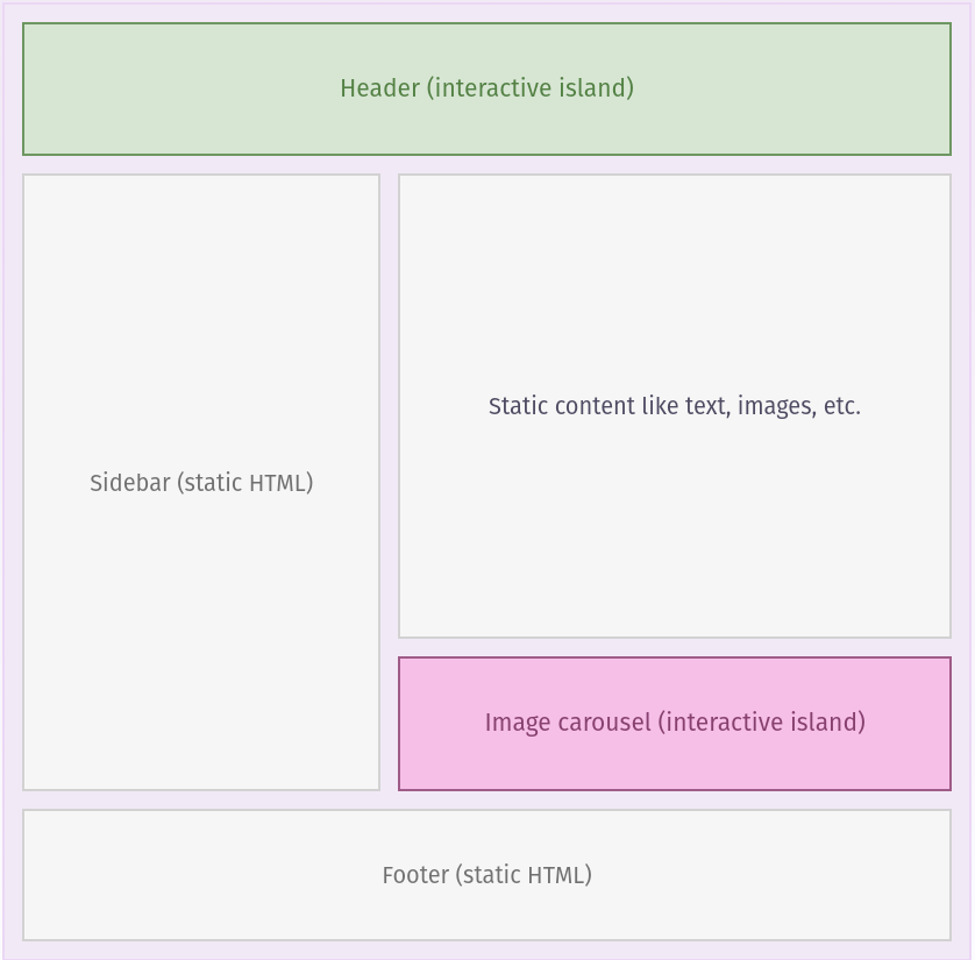
Scalability is a crucial aspect of any web framework. Astro's architecture, termed "Islands," offers automatic JS-to-HTML streaming, enhancing your application's scalability. It enables the development of lightning-fast content sites, web applications, and dynamic server APIs.
4. Ultra Optimized Images

Astro 3 is a powerhouse when it comes to web performance. Utilizing the modern WebP file format, it automatically optimizes your images for faster load times. Accessibility is at the forefront, ensuring that the required alt prop is utilized to enhance the site for screen readers and other assistive technologies. Moreover, Astro 3 prioritizes an exceptional user experience by default, adding loading and decoding attributes to accelerate page load speed.
5. Fast Loading Performance
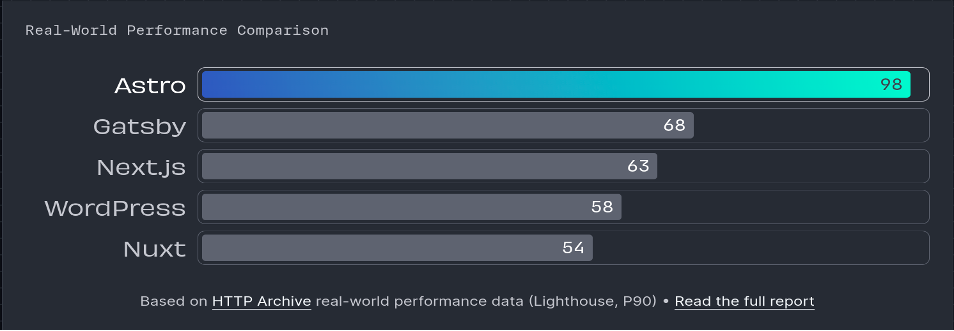
Astro optimizes websites like no other framework. With its unique page load performance, known as "Islands," it significantly improves conversion rates, Core Web Vitals, and SEO. The seamless integration of various frontend frameworks ensures a smooth user experience, enhancing overall performance.
6. Content-First Approach
Astro supports a content-first approach, allowing developers to fetch data from a CMS or work locally with type-safe Markdown and MDX APIs. This ensures that the content is managed efficiently, leading to improved core web vitals, conversion rates, and SEO.
7. Streamlined Development
Astro simplifies the development process by enabling developers to use their favorite UI library and existing UI components. Whether it's React, Vue, Svelte, or others, you can seamlessly integrate them into your Astro project. This streamlines the development workflow and accelerates project delivery.
Flaws with using Astro
Tooling and Ecosystem: As with any relatively new technology, the tooling and ecosystem around Astro may still be evolving. This could mean limited community support, fewer third-party libraries or plugins, and potential compatibility issues with other tools or frameworks.
Community and Support: While Astro has gained traction in the web development community, its community and support ecosystem may not be as mature or extensive as other frameworks or tools. This could impact the availability of resources, documentation, tutorials, and community-driven support channels.